Most leaders think about the questions they ask their team, the kind that help people think differently, examine their own choices, and come to better conclusions on their own. Those questions matter. But what might matter more are the questions you ask yourself.
Every leader I've ever worked with who is getting great results and driving real, meaningful change pays close attention to their own behaviors, not just what their team is doing, but what they themselves are doing. The ones who do it well tend to ask themselves a few consistent questions.
Here are three worth considering.
What Kind of Culture Am I Building?
Culture is one of the most important responsibilities of any leader in a veterinary practice. You are either building it with intention, or you are going to spend your energy fighting against whatever grows in its place.
One Small Action, One Big Signal
I worked with a practice manager who called one team member every Monday morning and asked three questions: What are your priorities this week? Who on the team are you going to help get better? And how are you going to make a difference for the clients you see?
The question is not whether you are creating a culture. You are. The real question is whether you are building the kind you actually want.
That was it. One call, one person, three questions. But with that single action, she created a culture that said: focus on yourself, your people, and the client experience. And even though she only called one person each week, you can bet everyone on the team was ready to answer in case they were next.
Culture Is Already Happening
The question is not whether you are creating a culture. You are. Every interaction, every reaction, every decision you make or avoid making is shaping it. The real question is whether you are building the kind of culture you actually want in your practice or just letting one form around you.
How Am I Creating Connection on This Team?
Think about the way people show up when they volunteer for a cause they care about. They work hard, often for no pay, in environments that are not exactly well organized. They pitch in wherever they are needed without being asked. What if your veterinary team showed up like that?
The Difference Between Compliance and Commitment
That kind of effort does not come from a job description. It comes from connection. Either people feel connected to the mission of the practice, or they feel connected to the work they do every day. Ideally both, but without at least one of those, you are going to get compliance at best.
So it is worth asking: How clear is the mission of your practice, not the one on the wall, but the one your team actually experiences? Are you giving people opportunities to learn, to grow, to do work that energizes them? Or are they just showing up, doing what is expected, and going home?
Where Connection Starts

Connection does not happen by accident. It starts with the leader being willing to share what matters and why. When people understand the purpose behind the work and see that their leader is genuinely invested in their growth, something shifts. That is when you start to see people show up differently.
What Kind of Coaching Is Happening in My Practice?
People are not just working for a paycheck. They want to be developed, supported, and helped to grow, especially early in their careers. And beyond that, practices where coaching is part of the daily rhythm consistently build stronger teams.
Reporting Is Not Coaching
But here is what I see in a lot of practices. Coaching becomes a conversation about metrics. Someone pulls up the numbers, points to the ones that are not where they should be, and asks the person to do better. That is not coaching. That is reporting.
Think about it this way. You would never evaluate a technician's skills by reading her charts without ever watching her in a procedure. The charts tell you what happened, but they do not tell you why. They do not show you where she hesitated, where her confidence broke down, or where a small adjustment in her approach could change everything. You have to watch.
What Coaching Actually Looks Like
Coaching in a veterinary practice requires the same kind of observation. It means being willing to watch how someone works, not just review what their numbers say. And it requires earning trust by making sure the person you are coaching knows that your focus is on their success, not just the practice's scorecard. When people believe you are genuinely interested in helping them grow, they respond to coaching very differently than when they feel like they are being evaluated.
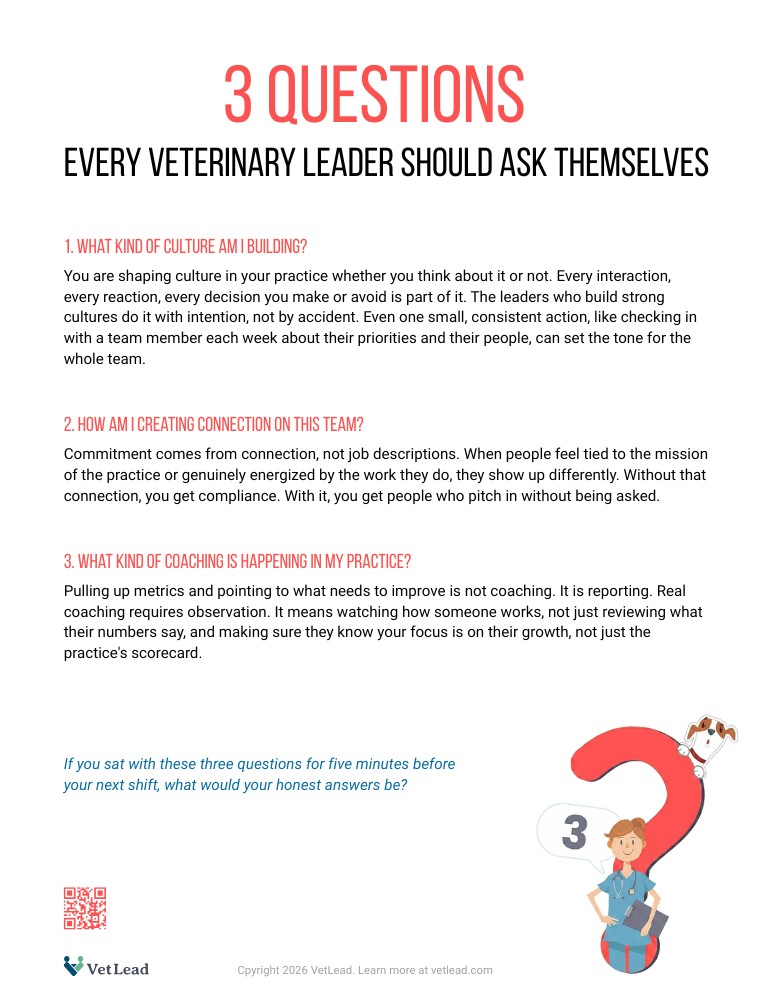
3 Questions Every Veterinary Leader Should Ask Themselves
Download for free and share it with leaders and teams. No email address required.
The Questions That Shape Your Leadership
These three areas, culture, connection, and coaching, tend to get the least intentional attention in veterinary practices, not because leaders do not care about them, but because the day fills up fast with surgeries, client calls, staffing gaps, and everything else that demands your attention right now.
But the leaders who carve out even a few minutes to sit with questions like these tend to build teams and practices that look very different from the ones where no one ever pauses to ask.
What would your answers be today?
If you are looking for more ways to think through these kinds of questions, VetLead has tools and resources built around exactly this kind of work, and it is worth exploring if you are ready.