When you spend your whole year putting out fires in your veterinary practice, it’s hard to feel like you’ve accomplished much. You survive the year. You don't shape it.
December arrives, and you look back and think, what actually got better? Not just what got handled, but what's genuinely different about your team, your culture, and your practice because of how you led?
That question can sting a little.
Why Veterinary Leaders Get Stuck in Reactive Mode
Most veterinary leaders I talk to will admit that their job feels almost entirely reactive. Things come at you fast. The pressure is constant. And the instinct is to just show up each day and tackle whatever lands in front of you.
The problem is that reactive leadership doesn't build anything. It maintains, sometimes barely.
The Cost of Leading by Impulse
When you're reacting all day, you're not making choices. You're following impulses. You're not deciding how you want to help someone grow. You're just responding to the fact that they stumbled. Again.
That can be exhausting. Not just physically, but in the way it makes you feel about your own leadership, as though you're running hard but not getting anywhere.
Why Year-End Creates an Opening
The end of the year creates a natural pause. The rhythm of the season almost forces you to slow down and take stock. And that pause is an opportunity, if you use it. Instead of letting the year wind down, what if you used these final weeks to do something most leaders skip entirely?
I think about this as three buckets:
- Reflect on what actually mattered this year
- Assess where your team honestly stands
- Plan your leadership calendar before the new year plans it for you
These aren’t resolutions or vague hopes that things will be different. They’re actual choices about how you want to lead and what you want to build.
Step 1: Reflect on Your Year as a Veterinary Leader
You can start by looking back, specifically at what was sustainable.
What did I do this year that's still making a difference today?
There's a difference between putting out a fire and building something that lasts. Fires you extinguish can reignite tomorrow. But when you coach someone through a challenge and they come out stronger, that's sustainable. When you build a process that makes your team more efficient, that’s sustainable, too.
Questions That Surface What Matters
These aren't meant to be answered quickly. Instead, sit with them and give yourself some time to really consider:
- What did I do this year that's still making a difference today?
- Where is my team stronger because of how I showed up?
- Where did I just survive rather than actually change anything?
- How effective was my hiring? How many would I hire again knowing what I know now?
- Did my coaching conversations help people grow, or did I just tell them things and hope they'd change?
You're not looking for reasons to beat yourself up, you're looking for clarity. You can't improve what you won't examine.
The Difference Between Surviving and Leading
It's really easy to confuse activity with progress. You can work incredibly hard all year and still end up in roughly the same place you started.
The question isn't whether you were busy. Of course you were busy. The question is whether your team is measurably better than they were twelve months ago. More capable. More engaged. More aligned. If not, that's not failure. That's information about where to focus next.
Step 2: Assess Your Veterinary Team's Engagement
Your team's engagement is your scoreboard. That's not a metaphor; it's the actual measure of your leadership.
Fully engaged teams provide better care. They create better client experiences, are more efficient, more profitable, and more likely to stick around. The research on this is overwhelming: Engagement predicts almost every outcome you care about.
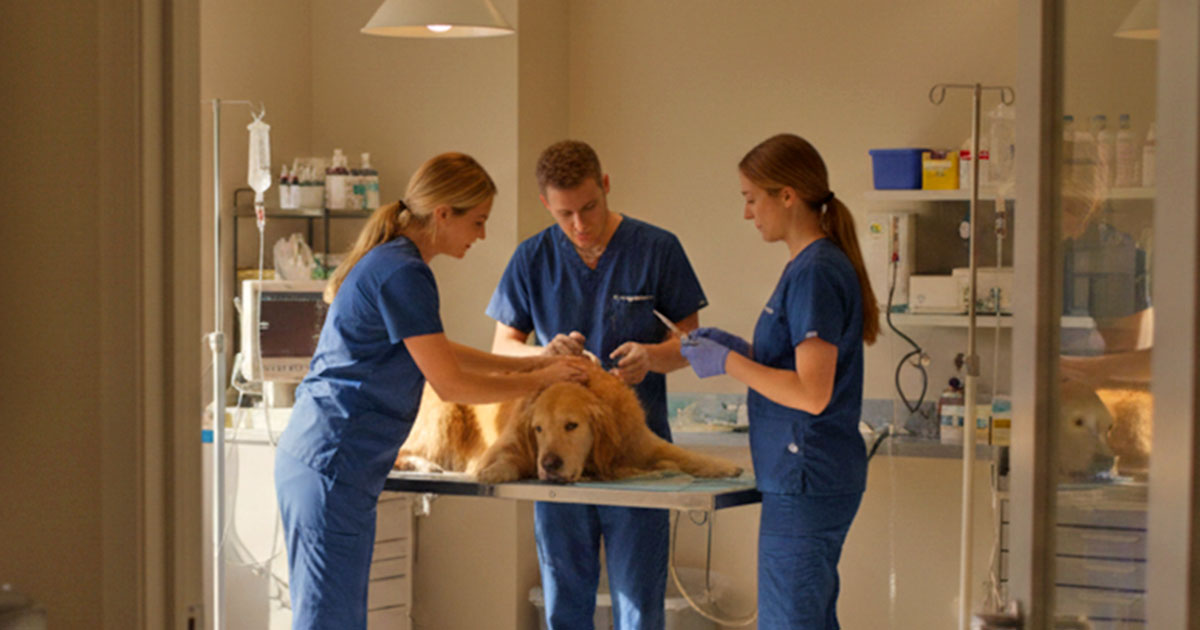
Where Does Your Team Actually Stand?
Consider these questions not against where you hoped they’d be, but where they actually are. For each person on your team:
- What are their real strengths, not just their job duties?
- What could they do that would make them even more successful?
- What do they want to learn?
- What do they want to accomplish next year?
That last question matters more than many veterinary managers realize. If someone on your team is heading into next year thinking "I'll just put in another year," you've got a problem. One year of experience repeated ten times isn't the same as ten years of growth.
When They Don't Have Answers
Sometimes you'll ask what someone wants to accomplish, and they won't know. That's not a dead end. It's exactly where your leadership matters most.
The whole point of questions like these is to cause people to think, not to extract answers they already have ready. If they already knew exactly where they wanted to go, they'd probably be moving toward it.
Your job is to help them figure it out. That might take more than one conversation, and that’s okay. The process of thinking about it is where change begins.
Step 3: Plan Your Veterinary Leadership Calendar
Here's what I see often: leaders who can tell me exactly what matters to them, but whose calendars look nothing like those priorities.
They'll say team development is critical, but there's nothing scheduled. Or, they'll say they want more one-on-ones with people, but weeks go by without a single conversation. They'll say they need time to think and plan. But every hour gets consumed by whatever's urgent that day.
If it's not on your calendar, it's not real.
Leadership Activities Worth Considering
These aren't prescriptions. They're possibilities. Think about which ones would actually make a difference for your practice:
- Daily huddles - Even five or ten minutes to align on the day prevents chaos
- Monthly one-on-ones - Scheduled, protected time with each person who reports to you
- Quarterly team conversations - Space for the team to think together about what could be better
- Weekly leadership planning time - Time blocked just for you to think, not react
- Consistent recruiting conversations - Don't wait for a vacancy to start building relationships with potential hires
Put It on the Calendar Now
Block the time before next year starts, and let people know what to expect. When you do this, you create some accountability for yourself.
Next year will fill up fast. The fires will start again. And if you haven't already claimed time for the leadership work that matters, you won't find it later.
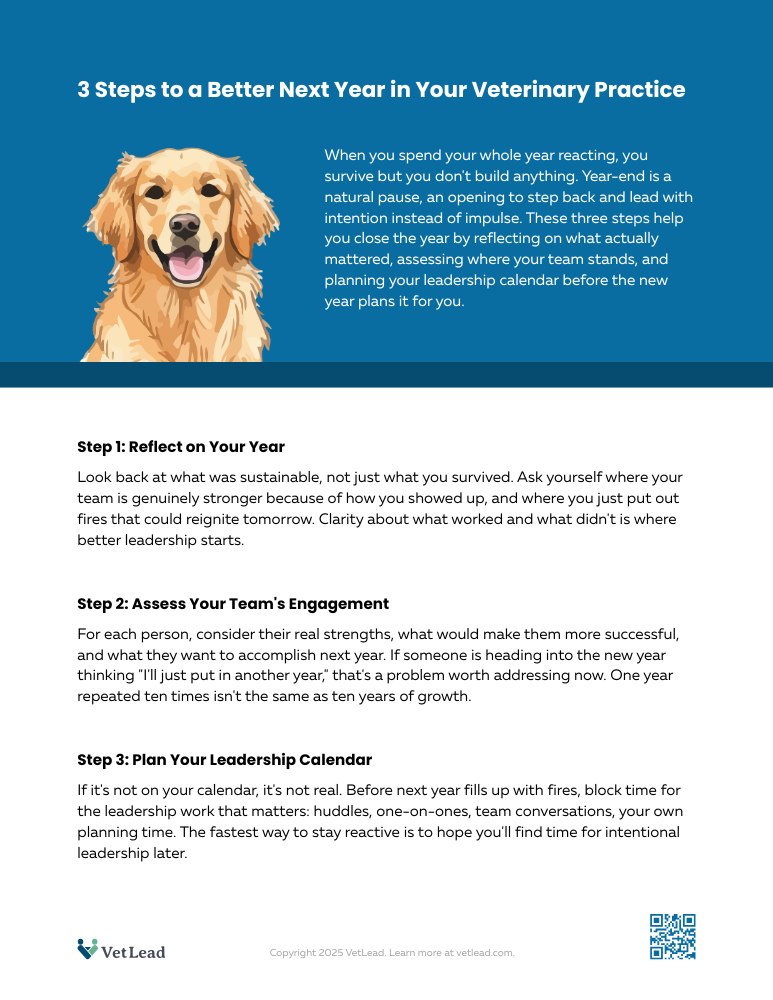
3 Steps to a Better Next Year in Your Veterinary Practice
Download this free resource and use it to evaluate how you approach recruiting and hiring. No email address required.
The Question That Changes Things for Veterinary Leaders
As you close out this year, here's what I want you to sit with: if nothing changes about how you lead, what will next year look like?
You already know the answer. It will look a lot like this year, maybe a little better in some areas, a little worse in others. But fundamentally you’ll find yourself in the same reactive cycle.
The better question is: what would have to change for next year to be genuinely different? I don’t mean different circumstances, a bigger budget, more staff, or easier clients. What would have to change about you? About how you show up, how you think, how you lead?
That's where the real change begins to happen, and the end of the year is the perfect time to start it.
If you're ready to build your leadership skills heading into the new year, the 30-Day Leadership Challenge gives you a focused way to start. It's free for 30 days, and it's designed specifically for veterinary leaders who want to lead with more intention and less reaction.