If you lead a veterinary team, you’ve probably had days when you wonder why things can’t just run smoothly. It’s not that you don’t care about helping your team grow. It’s that there’s barely enough time to keep up with the day in front of you. Coaching sounds great in theory, but most days, it feels out of reach for many veterinary leaders.
Between appointments, emergencies, and client conversations, the idea of sitting down for a 30-minute coaching talk seems impossible. Most days, you’re lucky to find a few minutes to eat lunch, much less coach. So coaching gets pushed aside until things “slow down,” which rarely happens.
The good news is that great coaching doesn’t depend on time. It depends on intention. The best leaders don’t wait for the perfect moment to develop their teams. They do it in the moments they already have, and they do it by asking questions that help people think.
The Myth That Coaching Takes Too Much Time
Many leaders treat coaching like a separate event. They believe it requires a meeting, a plan, or a quiet space. Because they cannot find the time, they default to what I call impulse coaching, reacting in frustration when something goes wrong in the practice.
Impulse coaching corrects behavior, but it doesn't really help people grow. It usually sounds like, “Next time, just do it this way,” or “We talked about this already.” It fixes the problem in front of you but doesn’t build capability for the next one.
Intentional coaching is different. It focuses on learning instead of correction. And it can take less than two minutes if you ask the right questions.
You don’t need a half hour to coach effectively. You can do it in 90 seconds if you’re intentional about the questions you ask and the tone you use. The goal isn’t to deliver a speech. The goal is to create awareness. That’s how coaching in veterinary medicine builds both skill and confidence.
From Impulse to Intentional Coaching

The shift from reacting to proactive coaching begins with a question. Instead of jumping in with an answer, pause and ask something that helps the person think.
When a veterinary technician forgets a step in a protocol, or reception struggles with an upset client, you can help them reflect instead of defend. Ask what they saw, what they were trying to accomplish, or what they would do differently next time.
These small moments add up. They turn daily challenges into development opportunities. They teach people to think through problems rather than wait for instruction. Over time, that creates a stronger, more capable team, one that relies on each other instead of constant direction.
Three Questions That Make Fast Coaching Work
You do not need a long list of coaching techniques. Three good questions can cover most situations and take less than a minute to ask.
1. What do you think is the best next step?
This question invites ownership. It gives your team member a chance to think and choose a direction rather than wait for approval. Even if their answer isn’t perfect, it builds the habit of problem solving.
2. What would make it better next time?
This helps the team member focus on learning instead of fault. It keeps the conversation forward-looking and positive. Improvement becomes a shared goal, not a criticism.
3. What can I do to help you get there?
This turns coaching into collaboration. It reminds people that development is a partnership and that leadership is support, not supervision.
You can use these questions in a hallway conversation, at the treatment table, or while walking between rooms. The entire exchange might last a minute, yet it can cause awareness and improvement that carries into the next case or client interaction.
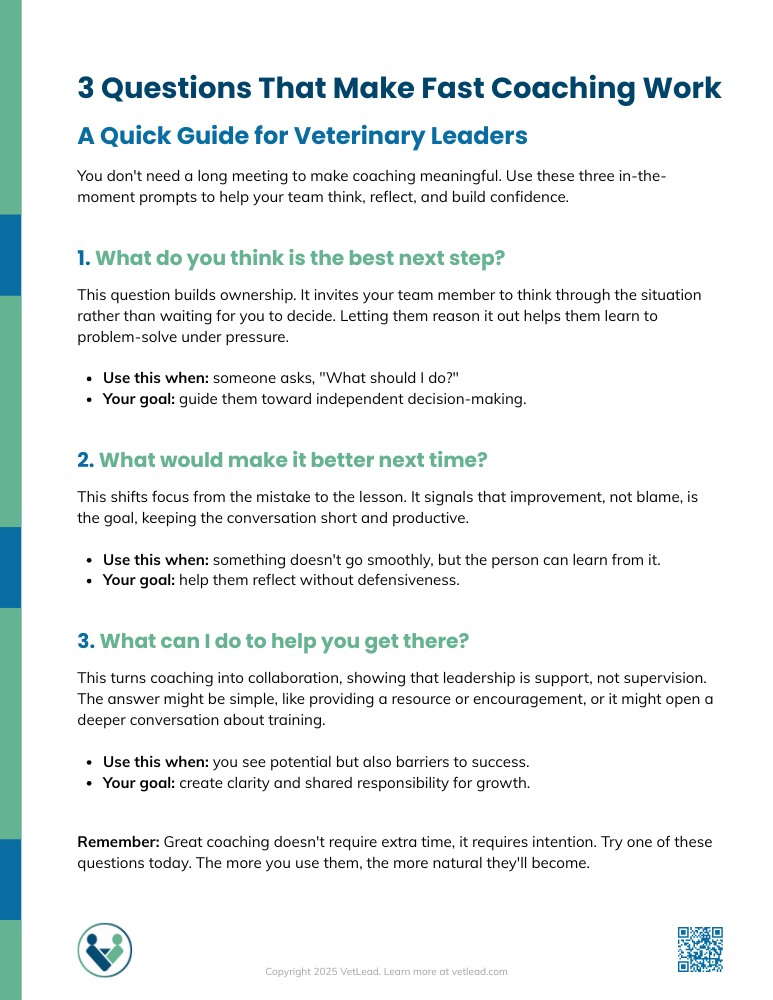
3 Questions That Make Fast Coaching Work
A Quick Guide for Veterinary Leaders
Download this free resource and use it to start a conversation with your team. No email address required.
Tone and Timing Matter More Than Length
Coaching works well when the timing feels safe and the tone feels curious. If someone is still frustrated, give them a moment before starting the conversation. When you do talk, stay calm and genuine.
Your questions should sound like curiosity, not correction. “What do you think is the best next step?” said with frustration is just another form of telling. Said with interest, it becomes an invitation to think.
The goal of coaching is not to control what people do but to help them see new options and grow in confidence. The way you ask the question matters as much as the question itself.
How to Make Quick Coaching a Habit
Building any new habit requires practice. The same is true for coaching. You do not become a faster or better coach by reading about it. You get better by doing it repeatedly and intentionally.
Start by finding one opportunity each day to ask a question instead of giving an answer. It might be with a team member who needs help, or during a moment that would normally lead to frustration. Treat that as your daily rep.
At the end of the week, reflect on how those moments went. Which questions felt natural? Where did the conversation create insight or engagement? Which moments could you have handled differently?
This kind of reflection turns coaching from something occasional into a habit. The more you practice short coaching interactions, the easier they become. Soon, you will start spotting opportunities without thinking about them.
When coaching becomes a habit, it no longer feels like another task on your list. It becomes part of how you lead. Over time, this approach becomes a natural part of how you lead your veterinary team.
Coaching That Fits Your Day
You don’t have to wait for the next meeting to coach your team. Development can happen in the small, everyday moments that fill a busy day.
If you can make asking short, meaningful questions part of your day, you’ll help your team grow faster than you ever could by waiting for more time.
Great leaders do not lead because they have extra hours. They lead because they make the most of the ones they already have.
Try one 90-second coaching conversation this week. Ask one good question, listen to the answer, and notice what changes. Those moments add up, creating small shifts that make your team stronger over time.
What do you think? Other veterinary pros want to hear from you! Share your experience in the comments below.
