I hear the phrase more and more as I work with veterinary teams. It's one you have probably heard before, and maybe even said yourself: "I'm just not comfortable doing that".
It's a small phrase that gets in the way of progress and growth, often used as a justification to avoid a needed conversation with a teammate or to keep from suggesting a new idea in a meeting. But leadership is not supposed to be comfortable.
Understanding the Role of Discomfort in Growth
Growth and learning are not comfortable processes. If you think of three things in your life that you are proud of accomplishing, you likely would not describe achieving them as "comfortable".
In a veterinary hospital, comfort is usually about the past. It represents the things we are used to and already do well. While comfort provides a necessary respite from chaos, it's something we retreat to for a rest, not something we should aspire to stay in.
When a veterinary professional tells me they are uncomfortable, I often ask: Why should a tough conversation feel comfortable? If you had to choose between progress and comfort, which would you pick? Leadership is often about doing the uncomfortable thing for the right reasons.
Resilience and the "Get Back Up" Mentality
Great veterinary leaders don't necessarily fall less often than anyone else. In fact, they likely make more mistakes because they are constantly pushing limits and trying new things in a high-pressure environment.
Great leaders seek out those who will tell them the truth and push them to stand back up.
Leadership in veterinary practices is unpredictable. Leaders take on more accountability and responsibility than others, which means there are more opportunities for things to go wrong. To survive in this mistake-ridden world, you need a reliable method to get back on track.
I have noticed three specific things that successful veterinary leaders do to ensure a bad Tuesday does not turn into a bad Wednesday:
- They have a recovery habit. This is a simple activity like exercise, reading, or even cooking, that shakes them out of their current pattern and gets them out of the "ditch".
- They refocus on the goal. A clear, compelling goal acts as a motivator to get back on the path when things go awry.
- They surround themselves with people who push. While it's natural to want comfort when we are down, great leaders seek out those who will tell them the truth and push them to stand back up.
Building Commitment Within Your Veterinary Team
I once met a man who had been sleeping on the sidewalk for quite a while. Despite his situation, he told me with absolute certainty, "I'm a chef". He was not "going to be" a chef; he had already claimed the identity. He got up off the concrete every single morning to attend a culinary program because he had a strong inner desire to make something happen.
In a veterinary practice, that level of commitment is more powerful than simple compliance. You can have the best strategy or medical protocols in the world, but without the commitment of your people, execution will fail.
Transforming your team into one that is committed means helping them find a connection to what they want to achieve. This does not mean mislead them or ignore the realities of a crisis. It means helping the team see a way forward, no matter how difficult the circumstances look.
Facing the Communication Gap
A common source of discomfort in veterinary leadership is the need for clarity. We often see a technician who is disengaged or a doctor who is defensive, and instead of addressing it, we dance around the issue. We use vague language and hope it resolves itself.
It will not.
Clarity is the foundation of trust, but it's uncomfortable. It requires saying the hard thing out loud and naming what is broken. Avoiding clarity does not make the problem go away; it just makes it harder to solve. Your team knows when something is wrong, and if you don't name the issue, they may wonder if you even notice.
You don't have to have all the answers to start the conversation. Simply being willing to say, "I have noticed something is not working, and I want to talk about it," can change the dynamic of the entire practice.
Maintaining Standards in a Busy Veterinary Environment
When a veterinary practice is in survival mode, dealing with staffing shortages or back-to-back emergencies, it's easy to let standards slip. It's not because you don't care, but because you are exhausted.
However, if you don't define what "good" looks like, your team will not either. Over time, the bar drops. What was once unacceptable slowly becomes the new normal. This is how great practices drift into mediocrity – not through one big failure, but through a thousand small compromises.
Ask yourself: What is the standard I'm actually holding myself and my team to right now? If you cannot answer that clearly, it's time to find that clarity, even if it feels uncomfortable.
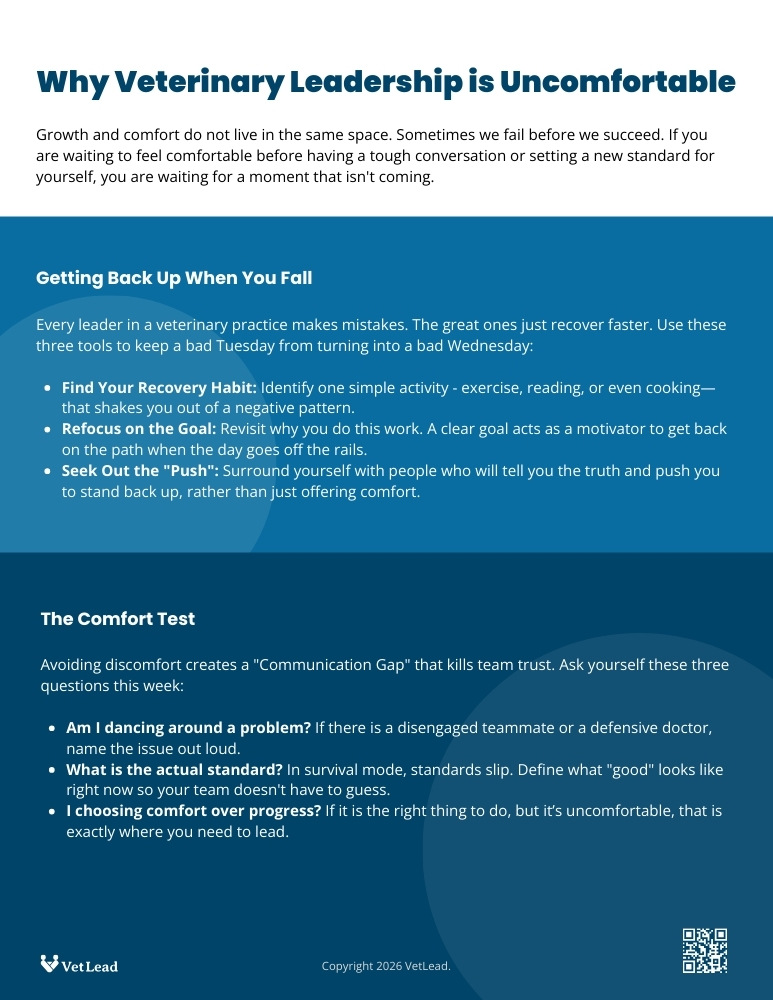
Veterinary Leadership Isn't Comfortable
Download this free PDF, share it with leaders and teams. No email address required.
Leading Through Discomfort in Your Veterinary Practice
We will never make a difference, have an impact on others, or accomplish anything hard if we keep asking, "What is most comfortable?"
Leadership is about doing the uncomfortable thing for the right reasons. Leaders acknowledge the discomfort and still move forward.
We need more veterinary leaders who are comfortable being uncomfortable. Embrace it. Rush headlong into it. Lead.
What do you think? Let us know in the comments section below.
I really liked examples, very helpful