Too many veterinary practices have a recruiting mindset that says "we hire to fill openings." There's a vacancy, the team is overworked, and there's a deadline looming. So we post a job, review applications, and hire from whoever shows up. But, finding great employees under pressure leads to mistakes and high turnover. And once you're in that cycle, it's hard to break out.
It's hard to build a hospital that performs better than the people in it. They decide, by their engagement, their initiative, and their accountability, how good your practice will be. That means the most important thing you can do as a leader is get hiring right.
Here's what that actually looks like.
The Reactive Hiring Trap
When I ask this question, a clear separation emerges. I've seen hospitals where they'd take less than 25 percent of their current team with them. Sometimes only about half would make the cut.
That's the cost of reactive hiring. When you're filling vacancies under pressure, you end up with a team where a significant portion wouldn't be your first choice if you were building from scratch.
"We wouldn't have lost some of the best employees we ever had because they couldn't work in this environment."
We wouldn't have lost some of the best employees we ever had because they couldn't work in this environment.
I've watched practices transform this completely. Through installing rigorous hiring processes and continuous talent evaluation, some have gone from that initial 25 percent all the way up to 70 or 80 percent. That's what's possible when you shift from reactive to proactive.
Build a Network Before You Need It
Your next great hire may be right in front of you. They may be working for a competitor, they may have waited on you at lunch, or they may be someone you worked with earlier in your career. Pay attention to how people approach their work, communicate with others, and whether they seem engaged.
Be Proactive in Recruiting for Your Veterinary Clinic
When you come across someone like this, stay connected with them just like you would a prospect or potential customer. Let them know you respect their attitude and their work, and would like to work together in the future if there's an opportunity, even if you don't have a place for them today.
A proactive recruiting process focused on finding superstars, no matter what your staffing situation, helps you maintain a strong talent pipeline. It reduces recruiting time and allows you to avoid the chaos that happens when a key player leaves.
Three Things to Look For in Every Candidate

Too often we hire during the infatuation phase. We have to get past the initial euphoria of a good impression and start looking with a critical eye. After all, if we're going to commit to them long-term, we need to know these things. Divorce is expensive for our practice.
For every candidate, whether it's a leadership role or a team position, focus on three key areas:
- Impact: What have they caused to happen? It's easy to get caught up in where they've been and not what they've done. Make sure you use questions that drill down on the specific actions the person took to create results. The more specific they can get, the more likely they actually did what they say they did.
- Vision: Where do they think the practice needs to go? Can they articulate a compelling view of what needs to happen? If they have a great list of accomplishments but no sense of direction or growth, keep looking.
- Fit: Can they be successful in this hospital? Entering a new practice is like merging onto a highway. If you're moving too fast or too slow relative to the rest of the traffic, there's going to be a wreck. And people don't often make quick, drastic adjustments in how they operate. Understand their pace and style, especially as it relates to communication with others. Be candid about whether it will work.
Don't even look at the resume until you've sent out screening questions that let candidates show you who they are as a person. Skills can be developed through leadership. Attitude, cultural fit, and commitment are what most managers identify when discussing previous hiring mistakes.
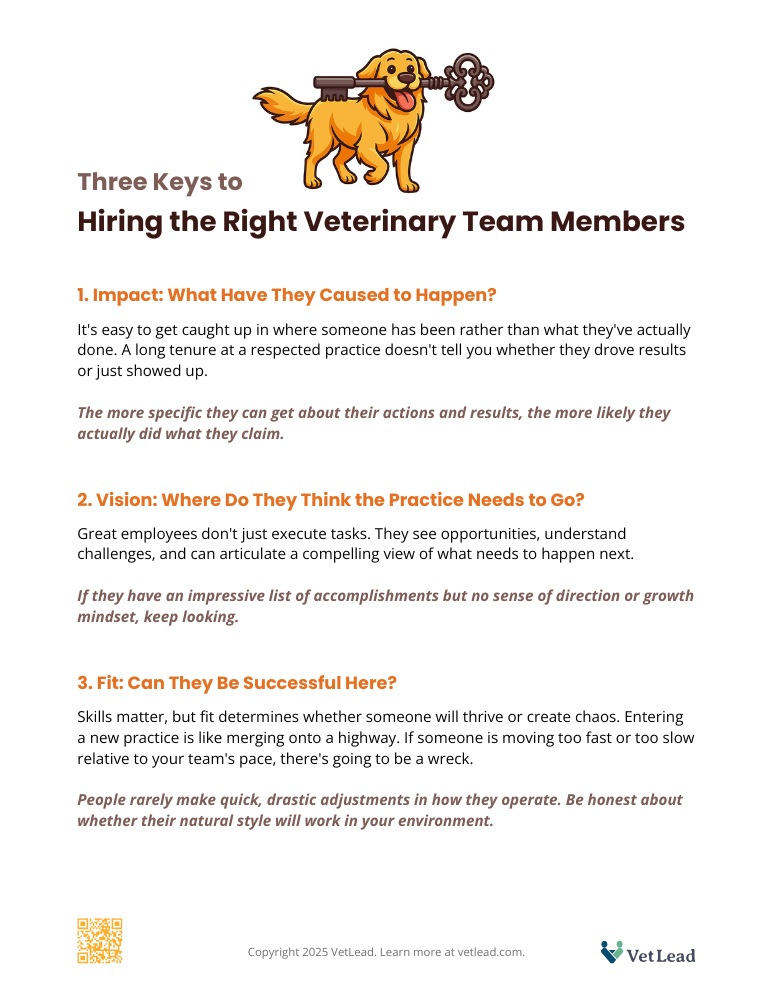
Hire the Right Veterinary Team Members
Download this free resource and use it to evaluate how you approach recruiting and hiring. No email address required.
The Cost of Ignoring Cultural Fit
Not long ago I talked with hospital owners who had fired their highest producer. That's a really hard thing to do. But the turnover on the tech team, the amount of drama, and daily complaints they were hearing made the decision clear.
Coach Challenging Veterinary Employees First
First, though, they had several coaching conversations, but this person wasn't willing to change and didn't seem interested in trying. Instead, they just wanted everyone else to be different.
It took them about eight months to get their production back up after letting this person go.
When I asked if they'd change anything about that decision, you can probably predict the answer: "The only thing we wish we'd done differently was we wish we'd done it a lot sooner. We could have kept some really high-performing people. We wouldn't have lost some of the best employees we ever had because they couldn't work in this environment."
That's the real cost of ignoring the fit filter.
The Shift That Changes Your Veterinary Practice
When you get hiring right, something fundamental shifts. Instead of constantly having corrective conversations about mistakes or struggling performance, you move into developmental coaching.
Now your conversations sound like: "You're crushing it. What do you want to get better at next month? What else do you want to learn or move into?"
There are so many ways to help people grow and more fully engage in your practice, but often we don't even consider them because we're too busy putting out fires.
The veterinary hospitals that break out of this cycle stop feeling held hostage by struggling team members. They have a process that can bring in people who are really good, not just at technical aspects, but at showing up, contributing, and helping build the team everyone wants to be part of.
If you want to create a growing, thriving, successful veterinary practice, constantly recruiting and being on the lookout for talented people is a great place to start.
What do you think? Other veterinary pros want to hear from you! Share your experience in the comments below.