"What does the mentor get out of a mentoring relationship?" This question came up during a workshop I delivered to a group of veterinary professionals. One of the leaders in the room said simply, "I get to give something back."
I hear that a lot. And I believe it. A lot of veterinary leaders reach a point where they care more about what they help others accomplish than what they accomplish themselves. That instinct is real, and it matters.
But instinct alone rarely moves anyone forward.
Good Intentions Without a Plan
Where Veterinary Leadership Stalls
I work with practice owners and managers who genuinely want to develop their teams. They care about their people. They want to be better leaders. And yet, when I ask what they're actually doing to make that happen, the room gets quiet.
That's because most veterinary leadership happens by accident. You respond when someone has a problem. You step in when something breaks. You give advice when someone asks for it. None of that is bad, but none of it is intentional, either.
Intentional leadership means deciding who you want to impact, how you want to impact them, and then building that into your week the same way you'd build in surgery schedules or team meetings. Without that structure, leadership becomes something you do when you have time. And in a veterinary practice, you never have time.
The Difference a Plan Makes
I've watched this play out in dozens of practices. The leaders who build structure around their development work, even simple structure, see different results than the ones who wait for the right moment. Their teams are more engaged, their conversations are more productive, and the people around them grow faster.
It's not because they're more talented. It's because they stopped leaving veterinary leadership to chance. Keep these points in mind as you work to influence and lead others:
1. Put It on Your Calendar
Time You Don't Schedule Disappears
Take a look at your calendar and ask yourself a question: does it reflect the leader you want to be?
If you say you want to develop your team but there's nothing on your calendar that supports that, the calendar is telling you something honest. Leading others shows up as conversations, check-ins, and coaching moments. Those things can be scheduled. And if they're not, they almost always get pushed aside by whatever feels urgent in the moment.
Start Small, but Start
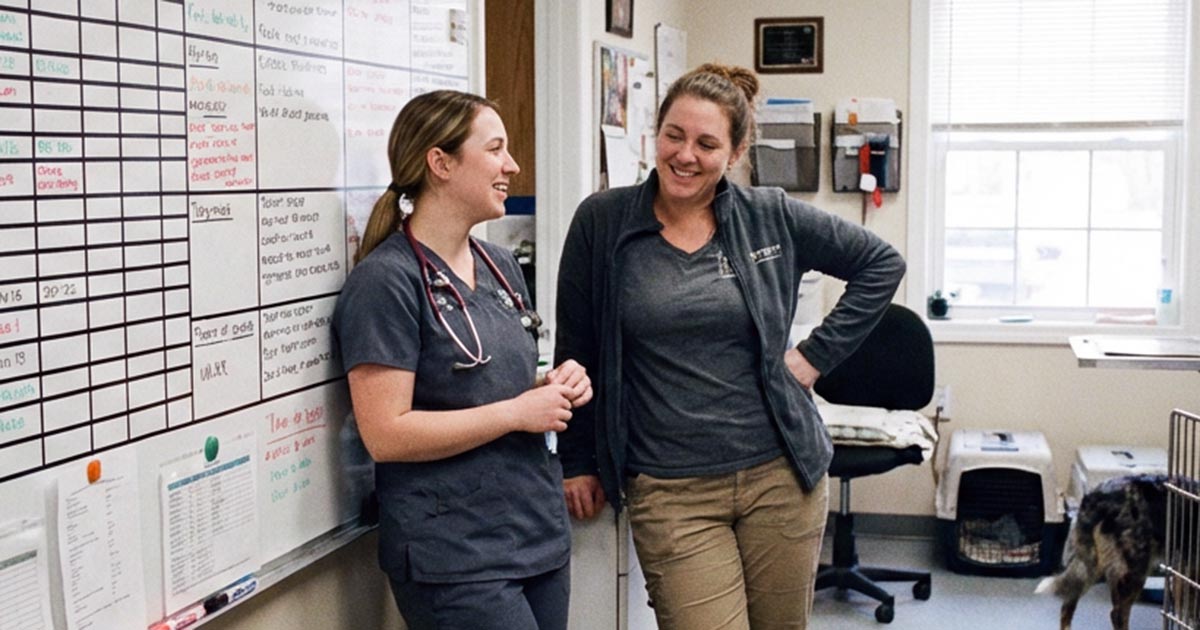
You don't need to block two hours a week for "leadership time." You need fifteen minutes with a technician who's growing into a bigger role. You need a monthly one-on-one with your practice manager that's actually about their goals, not just operations. You need a reminder on your calendar that says "check in with the new hire."
You may need to adjust the dates. That's fine. The point is that the likelihood you make something important happen for someone else goes up dramatically when it's scheduled. If your near-term calendar is already full, look a month or two out. There's almost always space further out, and putting something there today changes how you think about it between now and then.
2. Create Your Coaching Process
What Veterinary Leaders Do When Someone Needs Help
I've lost count of how many times I've asked a practice owner or manager, "What's your process for developing the people on your team?" And the most common answer is silence.
Most veterinary leaders think of development as something that happens naturally, or as how you respond when someone asks for advice. But coaching without a process is just reacting. And reacting isn't developing anyone.
Questions That Build a Process
A process doesn't have to be complicated. It can start with a few questions you ask yourself before every coaching conversation:
Do I understand this person's goals? Am I asking questions that help them think, or am I just giving answers? Am I connecting our conversations to something they actually care about? How am I tracking their progress over time? What am I doing to help them see their own capabilities differently?
Those five questions, asked consistently, create more development than most formal programs. Because coaching isn't about having a script. It's about having a way of thinking that you bring into every conversation.
3. Measure What Matters
Veterinary Leadership Isn't a Soft Skill
One of the traps I see veterinary leaders fall into is treating leadership as something you can't measure. It feels too subjective, too personal, too hard to put a number on. So they don't track it at all.
But you can measure it. You can track skill development, behavioral change, career growth, and how your veterinary team is performing over time. You can pay attention to how many people on your team have grown into new roles. You can notice whether your coaching conversations are leading to visible progress or just going through the motions.
Build Your Own Scoreboard
You don't need a formal assessment system to start. Ask yourself at the end of each week: Did I help someone grow? Did I have a conversation that moved someone forward? Did I follow through on the development work I planned?
That kind of self-check takes two minutes. But over time, it builds a pattern of awareness that changes how you lead every other hour of the day. The more you think of leadership as something you can observe and improve, the less likely you are to let it fade into the background when things get busy.
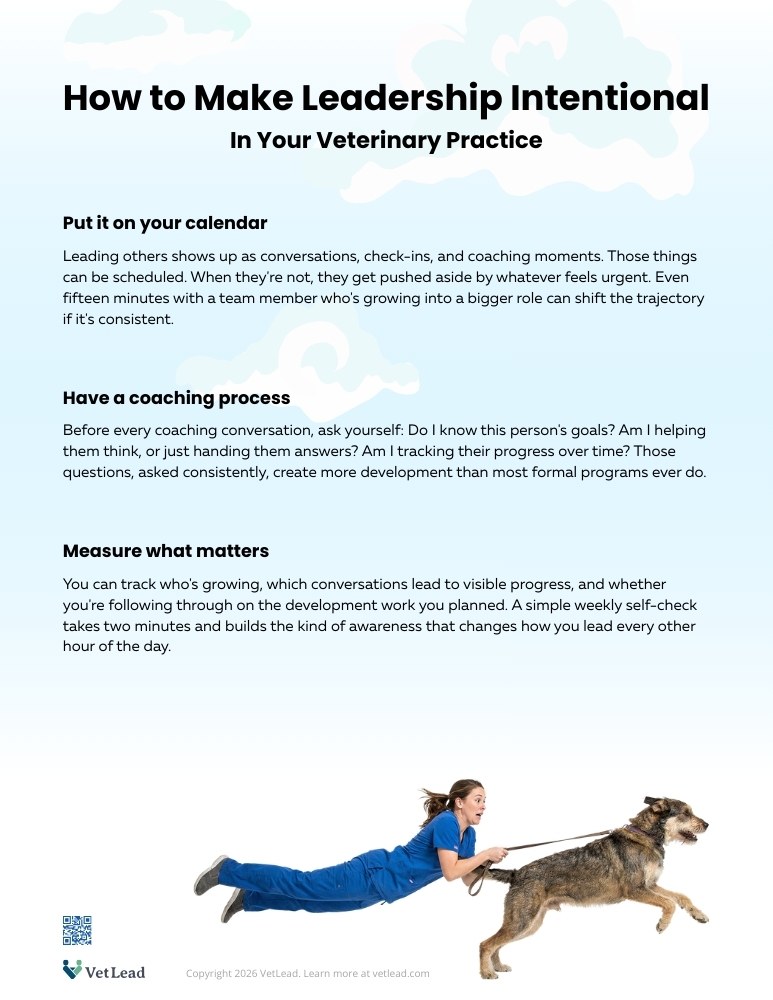
Download this PDF Now
Share it with leaders and teams. No email address required.
Veterinary Leadership Is a Skill
If you want to lead others in your veterinary practice and help them accomplish more than they could without you, you have to approach leadership the same way you'd approach any skill worth building. Put a plan together. Create a process. Track your progress.
The leaders I've watched have the greatest impact aren't the ones with the most natural talent. They're the ones who decided to stop leading by accident and start leading on purpose. They scheduled the time, built the habits, and held themselves accountable for the work.
That's available to anyone willing to be intentional about it. What would it look like for you this week?