Here's how most veterinary practices hire: Someone quits or gets fired. You scramble to post a job ad. You interview whoever applies over the next two weeks. You hire the best option from that small pool. Three months later, you do it all over again.
We treat hiring in veterinary medicine like an emergency response. Something breaks, we fix it. Someone leaves, we replace them. It feels urgent because it is urgent when you're short-staffed and drowning. And when you're drowning, you can't be picky. You end up settling for whoever applied that week, not the person you actually want on your team.
But what if the reason you keep settling isn't the talent shortage? What if it's when you're looking?
The Math Indicates Reactive Hiring Doesn’t Work
Let's look at the numbers. Turnover in veterinary medicine runs around 20%, and can be much higher spending on the role. If you have 60 employees, that means you're hiring roughly every 30 days on average. It might come in waves, but over the course of a year, you're filling a position every month or so.
Furthermore, it takes about 7 weeks from the time you post a job to the day someone actually starts. That's posting the ad, screening candidates, doing interviews, making an offer, giving them time to give notice at their current job, and getting them through your door., and that doesn’t factor in onboarding.
It feels impossible to stay short-staffed when you're already drowning. But what costs you more: being short one person for an extra two weeks, or hiring the wrong person who stays for two years?
If you're only recruiting when you have a vacancy, you'll always feel behind. By the time you fill one role, another person is already thinking about leaving. Reactive hiring just doesn’t lead to finding great talent for your team.
So if the math doesn't support the way most of us hire, what does?
Recruiting vs. Hiring
It’s easy to confuse recruiting and hiring. Put simply, hiring is what you do when you need someone. Recruiting is what you do, or should be doing, all the time. Yet most practices recruit only when they're hiring, and that contributes to the feeling of urgency and being reactive.
Recruiting is building relationships with people who might join your team someday. Hiring is extending an offer to someone when you have a role for them. One feeds the other, but they're not the same thing.
Continuous Recruiting Makes Your Veterinary Practice Better

When you recruit all the time, you're constantly casting a net for people who could make your practice better. You're always looking for superstars. Not because you have an opening today, but because you will have an opening eventually. And when that opening comes, you're not starting from zero.
What would change if you always knew three people who might be your next great hire? What if you recruited from a position of strength instead of desperation?
The practices that do this well aren't just lucky. They've made recruiting a continuous process instead of a panic response.
Building Your Always-On Recruiting System
So what does always-on recruiting actually look like? It doesn't mean you're interviewing people every week. It means you're creating pathways for great people to find you, and you're keeping your eyes open.
Start with Your Best People
They know other great people. Ask them who they'd want on their team if they could choose. The key here is to ask your high performers, not your struggling employees. Great people refer great people. Struggling employees often refer people who won't make them work harder or look worse by comparison.
Consider Referral Incentives
When someone you hire from a team member's referral works out, recognize it. You want your best people thinking about who else could thrive in your practice.
Make Your Practice Visible
This doesn't mean putting a "Help Wanted" sign on your door. It means signage that says something like, "We're always looking for talented people who want to be part of something great." You're not desperate. You're building. And yes, clients might apply. Or their kids might. That can feel awkward, but if your hiring process is solid, it handles that. You're not obligated to hire anyone. You're inviting great people to explore whether your practice is the right fit.
Keep Your Job Ad Live
Not just when you have a vacancy. Position it as "We're constantly building our team" rather than "We need to fill this role immediately." Cast a wide net, then screen efficiently. You want a lot of candidates to choose from, not just whoever happens to apply during your two-week window of desperation.
Recruit in the Wild
Conferences. CE events. Conversations with people who work with animals in other capacities. Pet sitters, groomers, people at feed stores. Great attitudes and a love for animals exist outside veterinary practices too.
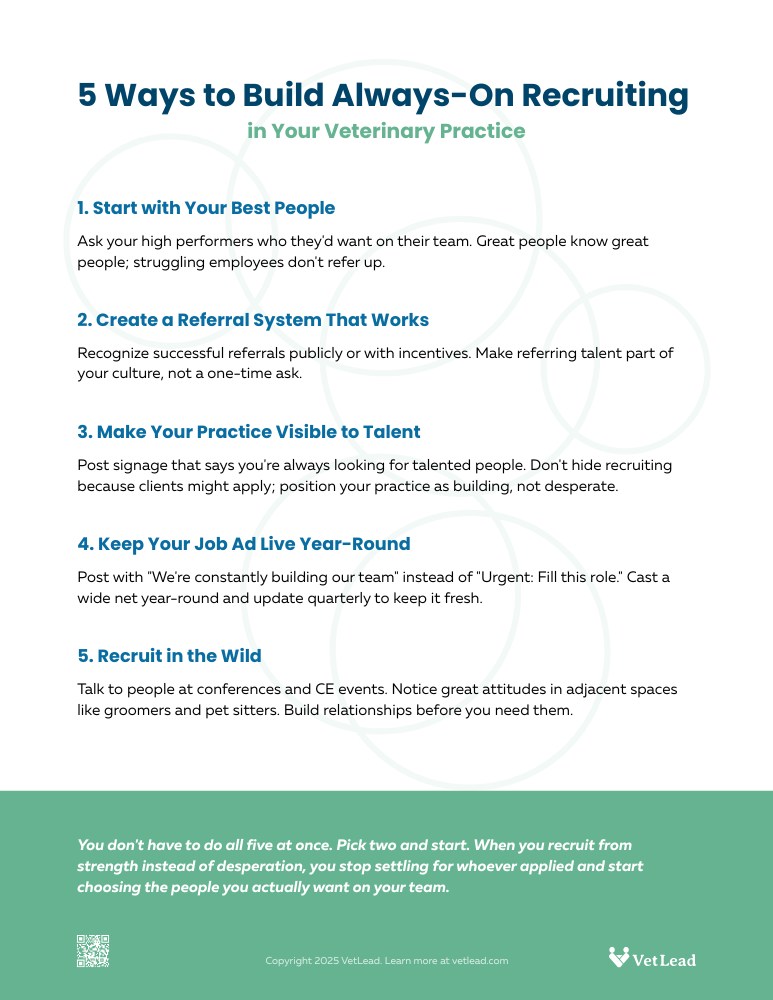
The Always-On Recruiting Process
Download this free resource and use it to evaluate how you approach recruiting and hiring. No email address required.
You Don't Have to Do All of These at Once
Pick a couple and start. The awkwardness fades once you realize how much better it feels to recruit from strength.
How You Recruit Affects Candidate Quality
Recruiting isn't just about filling roles faster. It's about raising the bar on who you hire.
When you recruit continuously, you're comparing candidates to your ideal team member, not to an empty chair. The question shifts from “Can this person do the job?” to “Is this person someone we want on our team when the right role opens up?”
It feels impossible to stay short-staffed when you're already drowning. But what costs you more: being short one person for an extra two weeks, or hiring the wrong person who stays for two years?
Your Recruiting Process Lets You Be Selective
The best employees don't apply to desperate-sounding jobs at struggling practices. They choose places that feel like they're building something. Your recruiting process signals what kind of practice you are. If you recruit because you're always looking to get better, you attract people who want to be part of that.
This empowers you to be selective. You're not taking the best of three candidates who happened to apply this week. You're choosing from the best people you've been building relationships with over time.
Trade Urgency for a Better Process
You can't change your turnover rate tomorrow, but you can start recruiting today.
Veterinary practices that never seem to struggle with hiring aren't lucky. They're just recruiting when everyone else is waiting for the next crisis. They're building relationships before they need them and creating systems that keep great people in their pipeline. It's a different way to think about hiring. Not as something you do when you have to, but as something you do because you're committed to building the best possible team.
What if you didn’t feel that urgency again? What if the next time someone leaves, you already knew exactly who you wanted to talk to?
That's what always-on recruiting creates. Not perfection, but possibility.
What do you think? Other veterinary pros want to hear from you! Share your experience in the comments below.